About 13 Things

Our Summer 2014 version of 13 Things begins the week of May 19. Let the THINGS begin!
Showing posts with label social. Show all posts

Monday, August 11, 2014

Week 13: We have arrived!

We're just a week away from meeting the newest crop of Kohawks. It's an exciting time of year; a time that makes me think both about my own experiences as a college freshman and about the experiences our new students are bringing in with them.

Take a moment right now to think about the technologies you had with you when you moved in to your freshman dorm (or wherever you lived for your first semester of college).  I had an account on
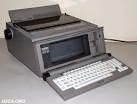
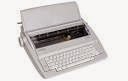
the South Dakota State Telephone Network (SDSTN) in my dorm room with long distance costing ten cents a minute and a Snoopy phone I'd won selling magazines. I brought a Brother daisy wheel typewriter (I was a terrible typist and hated every key stroke on that thing!) and my newly purchased Jansport backpack. By second semester, I'd learned about the computer lab in Briggs Library and spent most of my writing time there. And, luckily my second year roommate (also Lisa) showed up with an awesome new word processing device: I could actually read about two paragraphs of text on the screen before committing to print!

Now let's think about what those new students are moving in with next week. If recent history repeats, we know almost every one of them will have computer - most will have laptops. Less than 1% will not have a smartphone. Many will have multiple devices; an iPad, a laptop, a smartphone, gaming devices and more. They'll use them in ways we might not get (I know a student who composed a five page paper on his phone).

I think it's helpful to put our students life experiences, age and a few thoughts about how they have interacted in our world into perspective before they arrive. I have two articles to share this week that will make us think about our incoming Kohawks. The first is a blog post by the Tenured Radical (written by Claire Potter) on the Chronicle of Higher Education. Two weeks ago, Potter posted Bye-Bye Birdie: Sending the Kids Away to College. It's a casual post giving advice to parents on how to prepare their kids for college.  She writes about some touchy topics (creating separation by NOT calling your child multiple times a day and talking about drugs and alcohol) and some topics we probably wish were mandatory reading for ALL parents and incoming students (college is different than high school!). If you could add to the the list for parents, what topics would you include?

The second article is the Beliot Mindset List. I've been reading this list since starting at Coe. It's a list of popular cultural, political and historical references to help "place" the incoming (traditional) first year students. The list is published by Beliot College and started in 2002. Here's what Beliot says about their list:
"What started as a witty way of saying to faculty colleagues "beware of hardening of the references," has turned into a globally reported and utilized guide to the intelligent if unprepared adolescent consciousness. It is requested by thousands of readers, reprinted in hundreds of print and electronic publications, and used for a wide variety of purposes. It has caught the imagination of the public and has drawn responses from around the world, including more than a million visitors to the website annually."
The Class of 2018 List will be published in three weeks (according to the Mindset Facebook page), which is just a little late for us. Fortunately, much of the 2017 Mindset List can also ring true. A few key elements of the list that struck me:
  • Eminem and LL Cool J could show up at parents’ weekend. 
  • As kids they may well have seen Chicken Run but probably never got chicken pox.
  • Their TV screens keep getting smaller as their parents’ screens grow ever larger.
  • Rites of passage have more to do with having their own cell phone and Skype accounts than with getting a driver’s license and car.
  • With GPS, they have never needed directions to get someplace, just an address.
  • They have always been able to plug into USB ports
Two years ago, after sending detailed instructions for getting to my house to a new babysitter from the Student Association's list of house/animal/kid helpers, I realized I'd been wasting time compiling these instructions. I asked our new sitter if my directions had been OK, and she said she didn't even read them, just plugged the address into her phone. It's a hard habit to break, but I've restricted myself to just saying "it's a brown house."

How do you get yourself into the mindset of a 21st Century, born-in-1996 student? 


Monday, July 14, 2014

Week 9: The Happy Secret to Better Work

Do you work to be happy or are you happy to work? Are you a glass-half full sort of a person, or are you frequently looking for the tap, worried the half that's left is disappearing too quickly? According to studies led by Shawn Achor, your optimism levels, your social support structure and your ability to see stress as a challenge instead of a threat, are three times as likely as your I.Q. to predict your job success. Achor, a former distinguished educator at Harvard University, and now CEO of Good Think, Inc.,  researches positive outliers, or in other words, studies Positive Psychology.

Positive psychology is the scientific study of what makes life most worth living. It is a call for psychological science and practice to be as concerned with strength as with weakness; as interested in building the best things in life as in repairing the worst; and as concerned with making the lives of normal people fulfilling as with healing pathology. [published in Psychology Today: "What Is Positive Psychology, and What Is It Not?" May 16, 2008 by Christopher Peterson, Ph.D.]


Transcript can be read HERE.

I found this quote in the video to be particularly thought provoking as I thought about my interactions with our own students on campus:
"And what I found in my research and my teaching is that these students, no matter how happy they were with their original success of getting into the school, two weeks later their brains were focused, not on the privilege of being there, nor on their philosophy or their physics. Their brain was focused on the competition, the workload, the hassles, the stresses, the complaints."
Achor suggests ways to 'retrain' our brains to focus on the positive. Do you believe this is possible? Do you practice any positive psychology, yourself? In our data-driven world, where students are worried about transcripts, GPAs and what's on the next test, how do we encourage a positive approach? How do you do so in your own life?

Challenge: as suggested by Achor in this talk, recount something positive that has happened to you in the past 24 hours. Share in comments if you'd like, or just jot it down on a piece of paper on your desk. Put it where you'll see it for the next few days (Achor says this allows us to relive the positive moment).

Read more: Harvard Business Review: Positive Intelligence, published in January-February 2012.

Monday, May 19, 2014

Thing 1: You're Distracted!

Let's get our things started; and as we start reading and talking about, listening and watching and trying out all things technology-related, let's just say it - it's distracting.

Thing 1 is an article published in the Chronicle of Higher Education in March of 2013. The article is You're Distracted: This Professor Can Help by Marc Parry. In this article we are introduced to Dr. David Levy, a professor in the Information School at the University of Washington and his class "Information and Contemplation." The class attempts to scrutinize how people use technology, how fragmented attention and emotional connection factor in to technology use and what methods might improve technology-related productivity.

Here's a mini-experiment: think back to this morning. What did you do in the first 20-30 minutes after you logged in to your computer on campus? Were you concentrated on a singular task (getting through emails) or where there multiple tasks involved (reading emails, listening to VM, popping onto your cell phone to check a text, following links to new websites, checking weather forecasts, etc)?

Full disclosure: I read this article three or four times. The first several times I read it were interrupted by LOTS of distractions: emails, a Google chat that popped up, a phone call on my cell phone that could have gone to voice mail, looking something up on Facebook, and more. The last time I read it, I closed all my other browser tabs and windows, turned off the volume on my computer (so I wouldn't hear the familiar ping of a Google chat) and just read.

Some food for thought as you read the article:
  • Do you align with either the "never-better" or "better-never" trains of thoughts? Never-betters: the internet holds vast potential; we can unleash and harness advanced human intelligence. Better-nevers: this whole internet-technology-social media world is destroying our capacity for concentration and contemplation (and the ability to spell).
  • Is it possible to educate our selves to be more attentive?
  • Do you find the tools you use are helping you connect more or disconnecting you?
  • Does age or generational gap have anything to do with our ability to work attentively?
  • If you meditate, do you agree with the findings of the study the National Science Foundation funded by Levy and colleagues?
Challenge: pick a time in the next few days and track your email usage (like the assignment in the article) for 15 minutes. Are you concentrating on email or are you pulled away by other distractions? Do you think you would benefit from a more structured method for limited email distractions? Do you already have a process or method in place for feeling productive using your technology tools?

Post your thoughts/comments about the article in the comments section below. Happy undistributed reading!

Monday, July 9, 2012

Week 9, July 9

Although our mission and our status as a residential college does not lead us down the path of online education, it's hard not to think about it; it's everywhere. We see billboards plastered on I-380; we hear recent news about Iowa public school students having online options, and we're frequently exposed to articles about online learning in our scholarly articles.

Can you imagine a 100,000 student classroom? Peter Norvig and Sebastian Thrun couldn't either, until they were teaching one. Nationally known for his expertise in artificial intelligence, Peter Norvig had been teaching courses on the subject at Stanford, in person for some time before taking on the challenge of the free, online course.

Norvig discusses the project in this six minute, twelve second talk:


Points to Ponder:
  • Norvig and Thrun set out to provide a course "equal or better in quality" to the courses taught at Stanford in person; do you think this is possible?
  • Twenty thousand students completed the 10-week courses, putting in anywhere between 50 and 100 hours of course work during the course session. None of these students paid for the course. Is there a new level of motivation in our society - one leading self-starting, driven students to seek out high quality education without the high-dollar tuition?
  • What's the most striking element of this short talk? What surprised you or baffled you?
  • Do you agree with the statement on peer instruction? How do you encourage your students to work together in your courses?
  • Would you consider taking or teaching a course like this, online?

Monday, July 2, 2012

Week 8, July 2


It's a short week, full of fire-cracker celebration, so we won't think TOO much this week. We'll look at a topic that almost all of us engage in on a regular basis, but most of us don't think about at ALL: drying our hands with paper towels.

In this short talk, activist Joe Smith gives us a solution for saving over 500,000 pounds of paper towels from landfills every year. Follow Joe's simple instructions for drying and you'll be part of the solution!

This is a short talk, coming in under 5 minutes. Let's give our brains a little break this week; comment if you've got another tip for saving the world, but feel free to watch, implement and NOT comment if you'd like this week.

Happy 4th of July!


Thursday, July 1, 2010

Thing 6: Twitter

Willie Nelson does it. Ellen does it. Your favorite NPR hosts do it, too! And now it's your turn. No longer is Twitter mainly used to let the world know what you had for breakfast: surgeons use it to instruct medical students and educate the public, politicians use it to update their constituents, the Red Cross uses it share emergency information and educational leaders use it to share new ideas and engage in dialogues with interested "followers."

Thing 6: Twitter (Week of July 5-9 if you're working by week!)

Read the article "Twittering, Not Frittering, Professional Development in 140 Characters" from Edutopia OR 10 High Fliers on Twitter from The Chronicle of Higher Education, and then create a Twitter account for yourself. If you're comfortable with this, set your account as "Public" (that way we can all find you on Twitter). If not, then you have to approve individual people to be your followers. D
o a few Internet searches to find leaders in your area, and chances are that they will have a Twitter account (for example, I might search for leaders in the world of educational technology). "Follow" at least three of them, post your Twitter name to your blog (mine is lisawiestro), and then let us know who you're following.

In addition to following each of you, when you've got your Twitter accounts going, here is an example of some of the people I'm following:

  • David Warlick (a well known leader in ed tech)
  • Bryan Alexander (another ed tech guru, works for NITLE)
  • OnPointRadio (one of my fav NPR shows - people tweet questions, host Tom Ashbrook frequently reads comments and questions from real time tweeters)
  • Chronicle of Higher Education (tweets links to the major stories)
  • IADeptofEd
  • CoeBRAI (follows Coe's RAGBRAI group with daily updates from the road)
  • usedgov (US Department of Education)
Discovery Exercise
  1. Create a Twitter account
  2. Find at least 3 people to follow
  3. Retweet a post or two from someone you're following
  4. Post your Twitter name to your blog
  5. Tell us who you're following
  6. Reflect on your experience using/reading about Twitter. Do you think you would use Twitter? How could it be applied to an educational setting?